
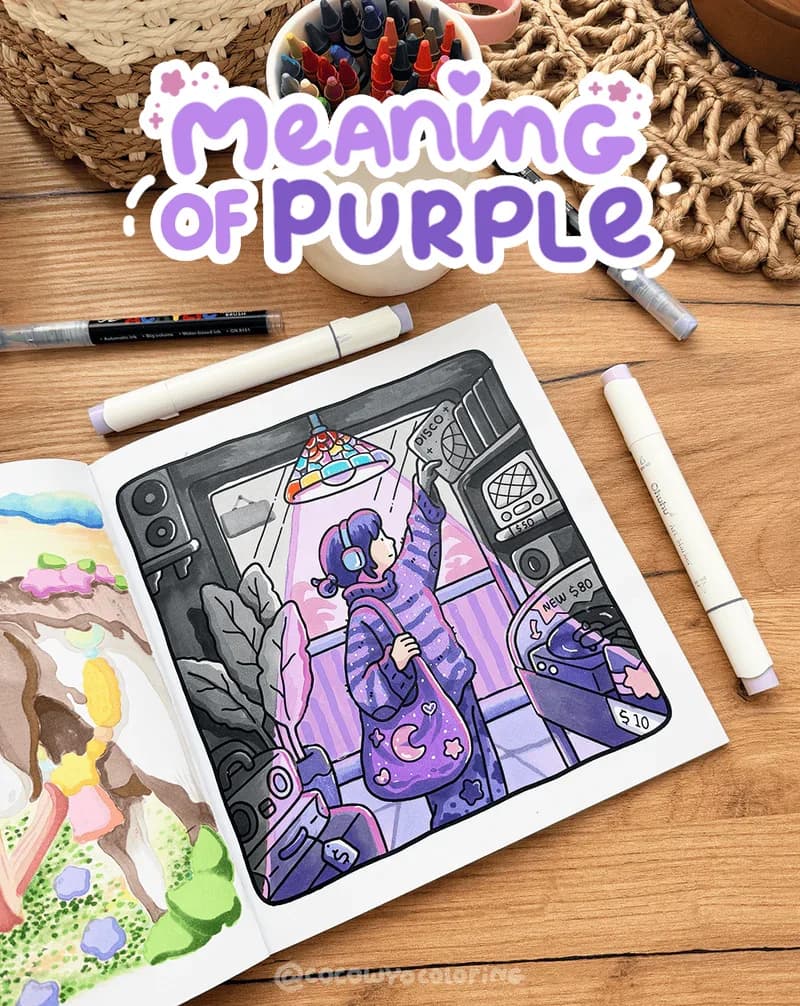
Here, we look at how purple fits into everyday life, personal style, and the way we use it on coloring page!
What Does The Color Purple Mean?
Purple is often linked to creativity, imagination and a sense of quiet depth.
It blends the calm of blue with the energy of red, which is why it can feel both soothing and expressive. Depending on the shade, purple can suggest elegance, reflection, or a more playful creative mood.
Lavender Color Meaning

Lavender is a light purple shade linked to peace, calm, and a sense of emotional balance. It carries gentle ideas of purity, grace, and softness, making it feel soothing rather than intense.
On a coloring page, it works especially well for backgrounds, florals, and quiet details where the goal is a relaxed, airy mood.
Violet Color Meaning

Violet is commonly linked to wisdom, creativity, and spirituality. Lighter violets lean gentle and reflective, while deeper shades suggest mystery and inner focus.
In coloring, violet adds depth without overpowering the page. It works well for backgrounds, soft shadows, and details where you want a calm yet expressive tone.
Royal Purple Color Meaning

Royal purple is strongly linked to royalty, luxury, and a sense of power. This meaning comes from its history as a rare and expensive color, often worn by kings and leaders. Along with status, royal purple also carries ideas of wisdom, mystery, spirituality and creativity.
On a coloring page, it works well for main subjects like elegant details, or places where you want the color to feel bold without being overpowered.
History of Color Purple
Purple’s history stretches back thousands of years, starting with rare Tyrian purple dye made from sea snails, once reserved for royalty and powerful leaders.
In 1856, synthetic purple dye made the color accessible to everyone, opening the door to its use in art, fashion and spiritual symbolism.
Over time, purple came to represent creativity, individuality and social movements.
Facts about Color Purple
Purple pigments appeared in prehistoric cave art in France, where early artists used minerals like manganese and hematite to create figures and handprints between 16,000 and 25,000 BC.
Originally, the color purple came from a dye made from the mucus glands of a tropical sea snail known as the murex.
The murex’s Latin name is Purpura, which is where we get the word Purple from.
Since purple dye was difficult and expensive to make, it naturally became a color reserved for royalty and power.
Purple is the hardest color for the eye to distinguish.
Carrots used to be purple as well as red, white, yellow, and of course orange.
Tips to use Purple in Coloring
Start light first: Begin with a lighter purple and build darker layers gradually to avoid muddy colors.
Use purple for shadows: Purple works well in shaded areas instead of black, especially on objects or backgrounds.
Keep purple away from heavy reds: Strong reds next to purple can clash and muddy the page. Leave a small buffer or use a neutral between them.
Test blends on scrap paper first: Always test purple mixes on another page to avoid surprises on your main artwork.
Outline first when using purple markers: Purple bleeds more visibly than many colors. Lightly outline shapes before filling to keep edges clean.